EMBEDDED FOLIO
EMBEDDED SYSTEMS WORLDVisual concept guide · Based on the original LinkedIn infographic
Updated from the original infographic for accuracy: Cortex-M Thumb instructions can be 16 or 32 bits long; instruction timing varies.
ISSUE 001 · FRONTembeddedsysworld.com
EMBEDDED FOLIO
PAGE 2 OF 2See it in action · Cortex-M example
Load. Compute. Store.
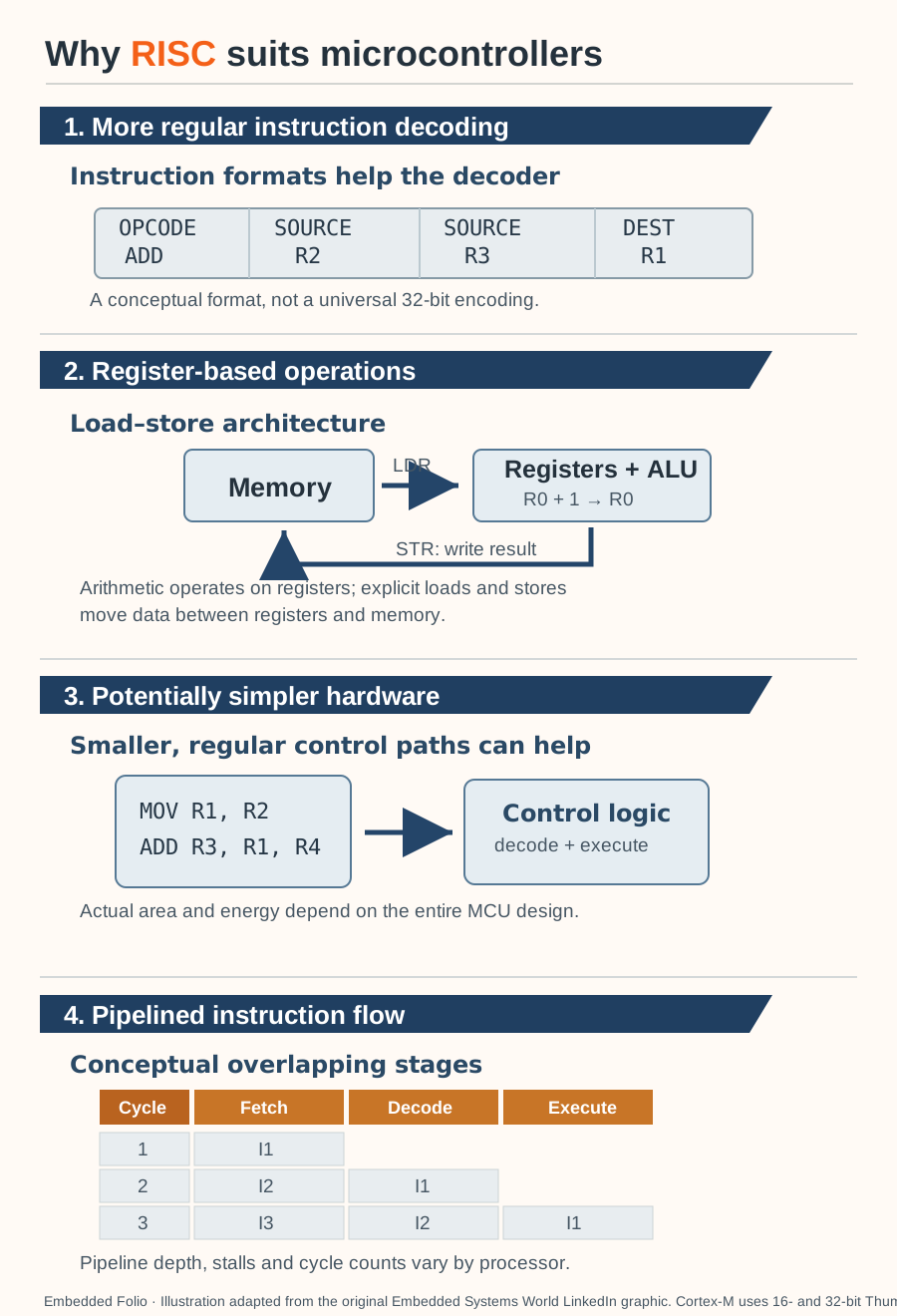
A typical register-based sequence separates the memory access from the arithmetic operation.
One increment operation
ldr  r0, [r1]     ; Read from memory
adds r0, r0, #1   ; Add 1 in a register
str  r0, [r1]     ; Write back to memory
r1 holds an address. r0 temporarily holds the value. The CPU does not have to run an arithmetic instruction directly on the memory location.
Memory→Registers
+ ALU→Memory
How execution moves through a simple pipeline
| Stage | Purpose |
|---|
| Fetch | Obtain instruction bytes from memory. |
| Decode | Interpret the operation and operands. |
| Execute | Perform an ALU operation or memory access. |
This is a conceptual three-stage view. Different microcontrollers have different pipelines, stalls and instruction timings.
Key takeaway
RISC is useful in microcontrollers because its regular, register-oriented approach enables efficient core designs. It is not a guarantee of fixed instruction width, one-cycle execution or deterministic timing by itself.
Quick check
Question: In the example, why is adds r0, r0, #1 performed after ldr?
Answer: The ALU adds using register operands; the load instruction first brings the memory value into r0.
ISSUE 001 · BACKOne concept. Two sides. Five minutes.